


IVDD emergency guide
IVDD emergency signs in dogs: when to seek urgent veterinary help
New spinal pain or neurological changes such as wobbling, weakness or loss of walking need prompt veterinary assessment. Inability to walk, paralysis, severe or uncontrolled pain, or difficulty urinating should be treated as urgent signs.
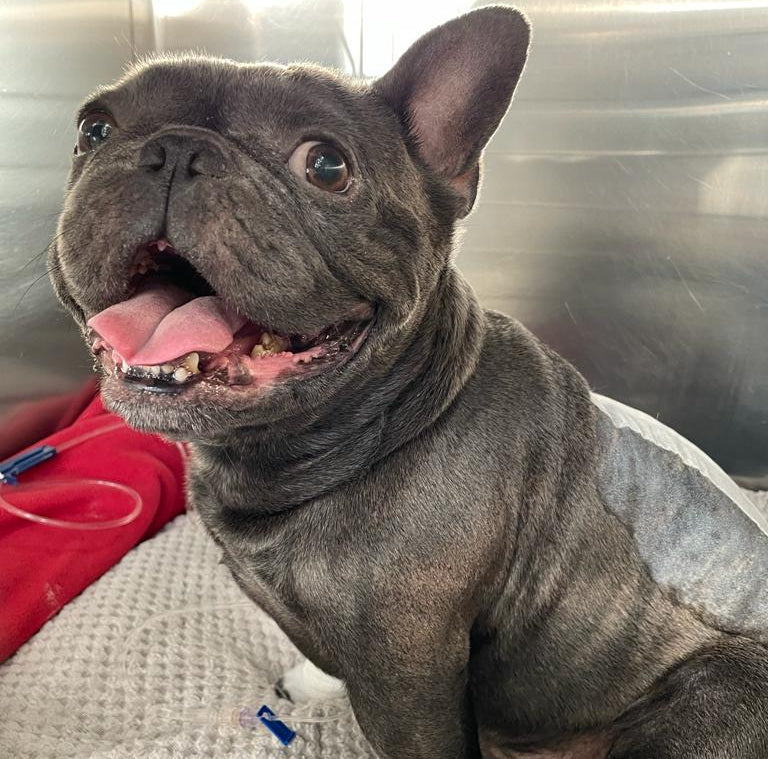
What matters now
Seek urgent veterinary help if your dog cannot stand or walk, is paralysed, has severe pain or cannot urinate.
Keep unnecessary movement to a minimum, call the clinic before travelling where possible, and follow its transport advice.
Emergency warning signs
Signs that should move the conversation from “watch and wait” to urgent assessment
These signs are not specific to IVDD, but they can indicate meaningful neurological deterioration and need veterinary assessment.
Cannot stand or walk
Sudden inability to support weight or take normal steps needs urgent assessment.
Dragging or paralysed legs
Dragging one or both back legs, sudden paralysis or rapidly worsening weakness is an emergency sign.
Severe or uncontrolled pain
Crying out, shaking, panting, a rigid posture or being unable to settle can indicate significant pain.
Urinary or bladder changes
Being unable to urinate needs urgent veterinary attention. New leakage or loss of control with weakness should also be reported urgently.
Immediate steps
What to do right now
1. Stop unnecessary movement
Prevent walking, running, jumping and stairs while you arrange care.
2. Support the whole body
Move slowly and support the chest and hindquarters together. Avoid twisting the spine.
3. Call your vet now
Describe exactly what changed, when it started, whether your dog can stand or walk and when they last urinated.
4. Transport with minimal movement
Use secure, well-supported transport and avoid letting your dog walk into or out of the vehicle.
Avoid further harm
What not to do
Do not repeatedly test walking
Do not stand your dog up over and over to see whether they improve.
No stairs or jumping
Prevent access to furniture, steps and slippery routes while awaiting advice.
Do not massage or stretch
Do not manipulate the back, neck or legs unless your veterinary team specifically instructs you.
Do not give human medication
Some human medicines can be toxic to dogs or interfere with veterinary treatment.
Safe transport
Move your dog as little as practical
For a small dog, support the chest and hindquarters together. For a larger dog, two people or a firm flat support may help if this can be done safely. Call the clinic before travelling and follow its instructions.
Prepare for the call
What to tell the vet
When symptoms began
Note the earliest change and whether symptoms appeared suddenly or gradually.
Mobility changes
Explain whether your dog can stand or walk and whether you have seen wobbling, knuckling, dragging or paralysis.
Bladder and bowel function
Tell the vet when your dog last urinated and whether they can urinate normally.
Medication and history
Share current medicines, previous back or neck problems, recent falls or jumps and other conditions.
At the veterinary clinic
What may happen next
Pain relief and stabilisation
The team may first assess and control pain and make sure your dog can be handled safely.
Neurological examination
Gait or movement where appropriate, posture, reflexes and sensory function help localise and grade the problem.
Imaging or referral
MRI or CT, or referral to a veterinary neurologist or surgeon, may be recommended depending on severity.
Treatment plan
The recommendation may include conservative management, hospital care, surgery and/or rehabilitation.
Need referral or specialist support?
Use the Aubenord IVDD specialist directory to find referral centres and veterinary specialists experienced in spinal and neurological cases.
Quick answers
IVDD emergency questions
Is suspected IVDD always an emergency?
Not every dog with back or neck pain has the same urgency. New pain or neurological changes need prompt veterinary advice; inability to walk, paralysis, severe uncontrolled pain or inability to urinate should be treated as urgent.
Should I let my dog walk to test them?
No. Restrict unnecessary movement and let a veterinary professional assess mobility and neurological function.
Can I give my dog a human painkiller?
Do not give human medication unless a veterinary professional has explicitly instructed you to do so.
How should I carry a dog with suspected IVDD?
Move slowly, support the chest and hindquarters together and minimise twisting. Call the clinic before travelling for individual transport advice.
Keep exploring
Related IVDD guides
Once the immediate risk is clear, continue with the guide that answers the next question.
Trust & safety
Medical limitations & how this emergency guide is prepared
This guide helps owners recognise warning signs and organise the next step. It cannot determine the cause, assess neurological severity or replace an examination by a veterinary professional.
Medical information & limitations
IVDD can resemble other neurological and orthopaedic conditions. Urgency and treatment depend on an individual veterinary assessment.
How this guide is researched
Aubenord uses peer-reviewed veterinary literature, specialist consensus guidance and reputable clinical sources.
Evidence base
Sources & further reading
- Griffin, Levine & Kerwin (2009) — canine thoracolumbar disc disease, neurological examination and emergency medical therapy
- Olby et al. (2022) — ACVIM consensus statement on acute canine thoracolumbar disc extrusion
Evidence limit: these references support general clinical concepts and cannot diagnose an individual dog.