
1. Prepare the destination
Open doors, clear obstacles, put down non-slip footing and have the crate, bed or car space ready before moving your dog.
Recovery Care
Learn safer ways to lift, carry, reposition and support a dog with IVDD while limiting unnecessary spinal movement.
Important: Ask your veterinary team to demonstrate the safest handling method for your dog.
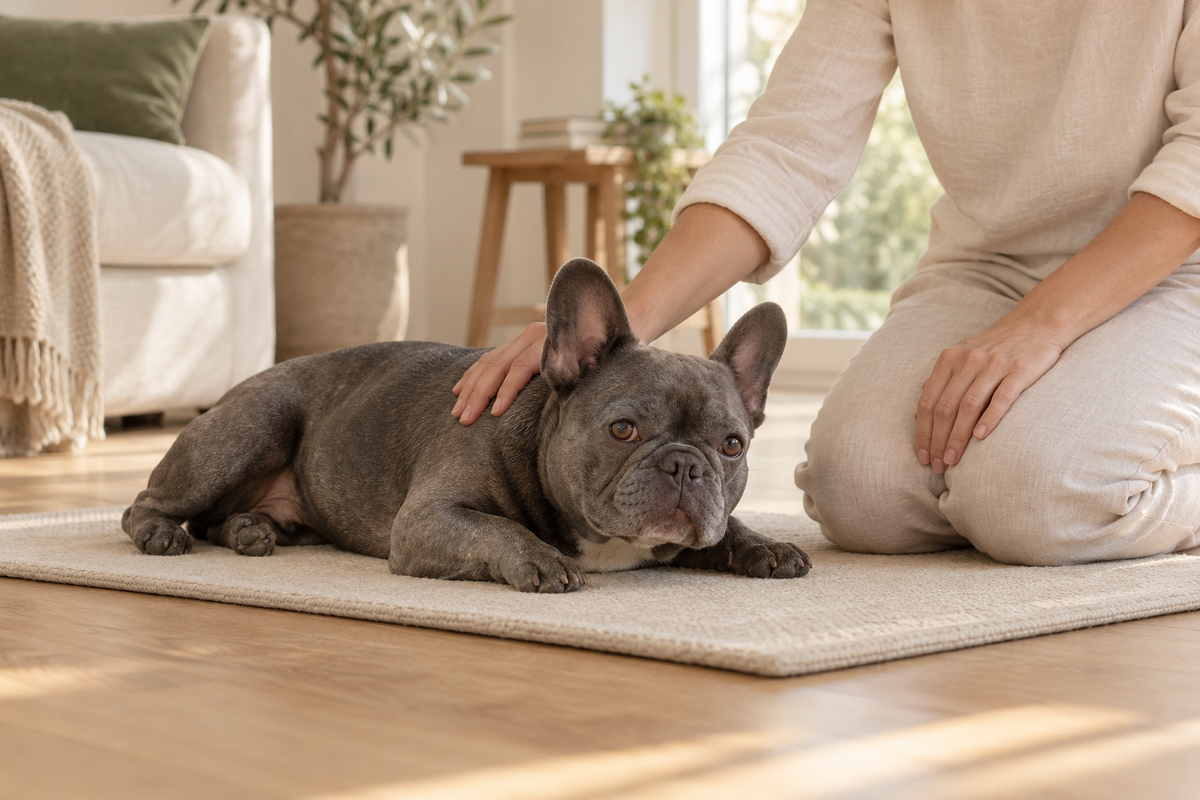
Core Principles
Support the chest and hindquarters together so the spine stays as level as possible.
Plan each movement and keep turns slow, smooth and minimal.
For larger or unstable dogs, ask another adult to help.
Everyday Care
Keep your dog close to your body and use the technique shown by your veterinary team.
Use an approved harness or sling and keep toilet trips short and controlled.
Move gently when advised and keep bedding dry and supportive.
Prevent jumping and use a secure, level recovery space.
Step-by-step handling
Open doors, clear obstacles, put down non-slip footing and have the crate, bed or car space ready before moving your dog.
Keep the body close to you and support both ends together. Avoid letting the hindquarters hang or twisting the spine during the lift.
Use slow, coordinated movements. For a larger, painful or unstable dog, use two adults if your veterinary team has shown you how.
Place all four limbs or the whole supported body onto a stable surface before releasing your hold.
Olby NJ et al. ACVIM consensus statement on acute canine thoracolumbar IVDE. Full text.
Explore Aubenord’s UK recommendations for harnesses, slings, mobility support and other recovery-care essentials.
Quick Answers
Avoid allowing the hindquarters to hang. Support the front and back together.
No. Do not repeatedly stand or walk your dog to check progress.
Prevent stairs unless your veterinary team has specifically approved them.
Step-by-step handling
Open doors, clear obstacles, put down non-slip footing and have the crate, bed or car space ready before moving your dog.
Keep the body close to you and support both ends together. Avoid letting the hindquarters hang or twisting the spine during the lift.
Use slow, coordinated movements. For a larger, painful or unstable dog, use two adults if your veterinary team has shown you how.
Place all four limbs or the whole supported body onto a stable surface before releasing your hold.
Olby NJ et al. ACVIM consensus statement on acute canine thoracolumbar IVDE. Full text.
Learn what to monitor, how to maintain hygiene and when professional help is needed.
Aubenord provides general educational information. Ask a qualified veterinary professional to demonstrate handling techniques for your dog.
Handling support
Slings and support harnesses may make transfers safer for some dogs, but the priority is controlled movement and the handling method recommended for your dog.
Trust & safety
Safe handling is individual. This guide can explain principles, but a veterinary or rehabilitation professional should demonstrate the safest technique for your dog’s size, pain, neurological function and stage of recovery.
Aubenord cannot assess your dog’s neurological function, pain, bladder or bowel function, diagnosis, rehabilitation needs or treatment plan.
Follow your veterinary team’s individual advice. Seek prompt veterinary assessment for new or worsening pain, weakness, wobbliness, bladder changes, paralysis or loss of walking ability.
Aubenord’s IVDD content is prepared by the Aubenord Editorial Team using peer-reviewed veterinary literature, specialist consensus guidance and reputable clinical sources.
Where owner experience, including Loui’s story, is included, it is clearly separated from veterinary evidence.