
Mobility Support

Mobility Aids for Dogs with IVDD

Mobility aids can support safety, independence and quality of life when correctly selected and fitted.

View Recovery Guide

Important: Ask a veterinary or rehabilitation professional whether an aid is suitable for your dog's current stage.
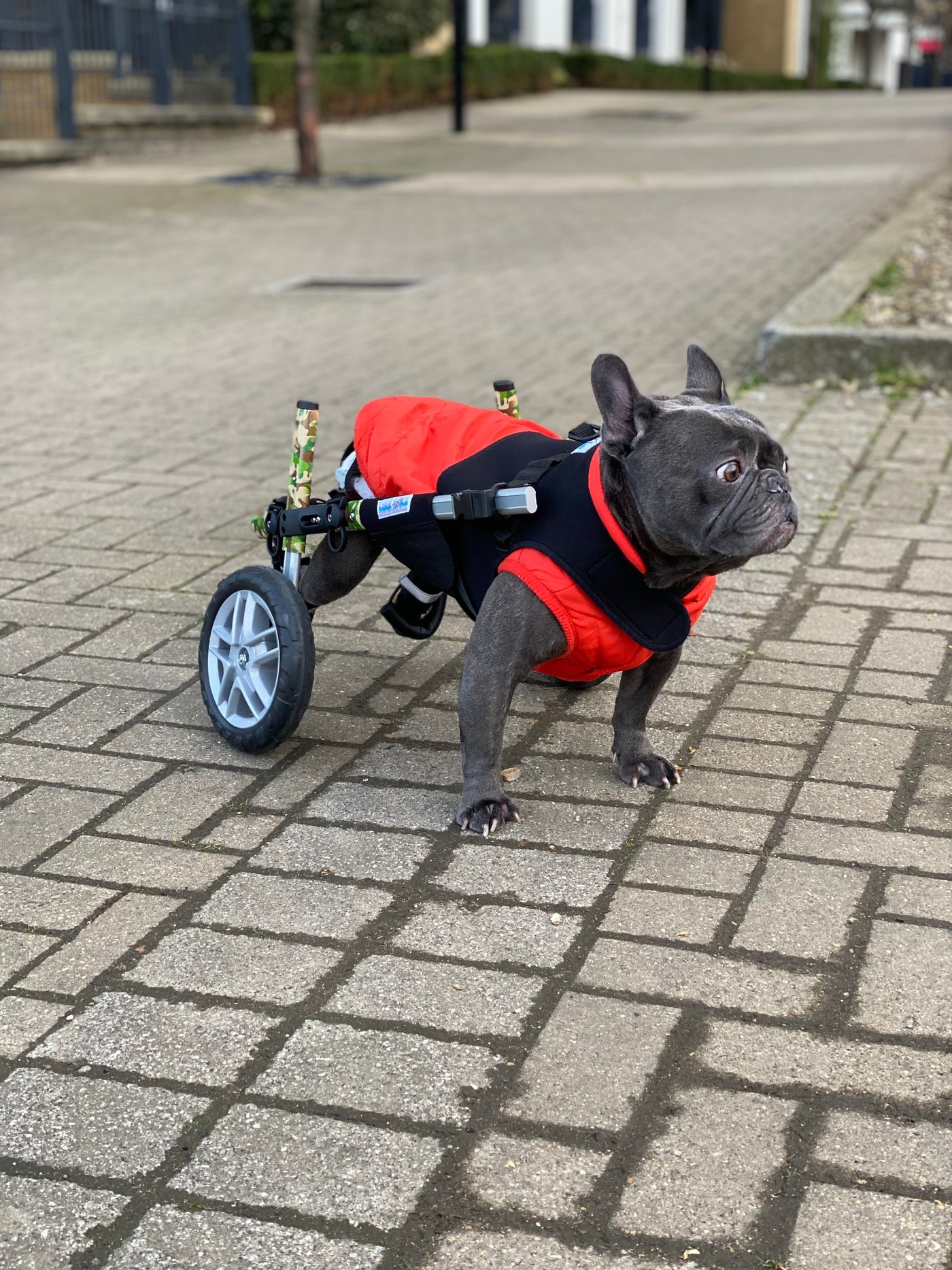
Dog using professionally fitted mobility support equipment

Choosing Support

Match the aid to the dog and the task

Support harnesses

Useful for controlled walking and toileting when fitted correctly.

Rear-support slings

May help weak hindquarters during short supervised tasks.

Wheelchairs

Can support selected dogs after professional assessment and fitting.

Ramps and adaptations

May reduce jumping and improve safe access when activity is permitted.

Fit and Safety

Check comfort every time

Correct size

Poor fit can create rubbing, pressure or unsafe posture.

Skin checks

Inspect contact areas before and after every use.

Supervision

Do not leave a dog unattended in mobility equipment unless specifically approved.

Reassessment

Needs may change as strength, weight and function change.

Buying Questions

What to ask before choosing a product

Is it suitable now?

Confirm it fits the current recovery stage.

Who will fit it?

Ask whether professional measurement or fitting is required.

Can it be returned?

Check adjustment, trial and returns policies before purchase.

A better way to choose equipment

Start with the task, not the product

Toileting support

A rear sling or supportive harness may help selected dogs stay balanced for short, controlled toilet trips. Ask how much weight you should support and where the equipment should sit.

Assisted walking

Support equipment should make an approved movement safer — not encourage extra walking during a restricted stage.

Wheelchair mobility

A cart may help selected dogs with persistent mobility impairment, but spinal support, height, width, balance, paw position and skin contact all need checking. Have the fit reviewed by your vet or rehabilitation professional.

Home access

Ramps, gates and non-slip surfaces can remove common jump and slip hazards once the dog is medically cleared for the relevant movement.

Fit check: stop using equipment if you see rubbing, pressure sores, unusual posture, increased pain, new weakness or distress. Needs can change as strength and body weight change.

Questions worth taking to your vet or rehab professional

  • What exact task are we trying to make safer?
  • Is this aid appropriate at the current recovery stage?
  • How should the spine and pelvis sit when the device is fitted?
  • How long should it be used at one time?
  • Which skin and paw areas should we inspect after use?
Sources & further reading

Olby NJ et al. ACVIM consensus statement on acute canine thoracolumbar IVDE. Journal of Veterinary Internal Medicine.

Aubenord uses this evidence to frame equipment as supportive care, not a substitute for neurological assessment or rehabilitation planning.

Understand the recovery journey

See common stages and milestones without treating them as fixed deadlines.

Read Recovery Timeline

Important medical disclaimer

Mobility equipment should be selected and fitted with professional guidance.

Decision framework

Choose mobility support for the problem you are trying to solve

Support during toileting or transfers

A sling or support harness may be useful when the goal is controlled assistance rather than independent mobility.

Traction and safer footing

Non-slip routes and environmental changes may matter more than adding a device if the main problem is slipping.

Longer-term wheelchair mobility

A wheelchair can support selected dogs with persistent mobility loss, but fit, front-limb capacity, skin protection and the veterinary/rehab plan all matter.

Do not let equipment delay diagnosis

New weakness, dragging, knuckling or loss of walking needs assessment before it is treated as an equipment problem.

Practical mobility support

Move from the mobility problem to the right type of support

Transfers & toiletingSupport harnesses and slings may help with controlled assistance.
Traction & home accessNon-slip routes, ramps or barriers can sometimes solve an environmental problem before a larger mobility device is needed.
Persistent mobility lossWheelchairs can be transformative for selected dogs when fit, skin care, front-limb capacity and the rehab plan are considered.

Commercial links are kept downstream of the educational decision framework; new neurological loss still needs assessment first.

Trust & safety

Medical limitations & how this guide is prepared

Aubenord provides general educational guidance. Diagnosis, treatment and changes to an individual dog’s care plan should come from the veterinary professionals responsible for that dog.

Medical information & limitations

Aubenord cannot assess your dog’s neurological function, pain, bladder or bowel function, diagnosis, rehabilitation needs or treatment plan.

Follow your veterinary team’s individual advice. Seek prompt veterinary assessment for new or worsening pain, weakness, wobbliness, bladder changes, paralysis or loss of walking ability.

How this content is researched

Aubenord’s IVDD content is prepared by the Aubenord Editorial Team using peer-reviewed veterinary literature, specialist consensus guidance and reputable clinical sources.

Where owner experience, including Loui’s story, is included, it is clearly separated from veterinary evidence.

Mobility terminology

Dog wheelchairs, back-leg wheels and mobility aids: what owners are usually looking for

A dog wheelchair, rear-leg wheelchair, dog cart or back-leg wheels can describe similar mobility equipment. The right setup depends on which limbs need support, body measurements, comfort, strength and the veterinary or rehabilitation plan.

Rear-leg support

Designed for dogs whose hind limbs need support while the front limbs can still bear weight appropriately.

Front or four-wheel support

Some dogs need more extensive support. That decision should be made with professional guidance rather than from product terminology alone.

Measure before buying

Fit matters. Follow the manufacturer’s measurement method and check pressure points, posture and fatigue carefully.