


Start here
IVDD guide: your step-by-step roadmap
Move from recognising urgent signs to understanding diagnosis, making treatment decisions, recovery and longer-term support.
When Loui first developed IVDD, one of the hardest parts was understanding what came next. We built this roadmap to put that journey into a clearer order, so you can focus on the stage your dog is at today.
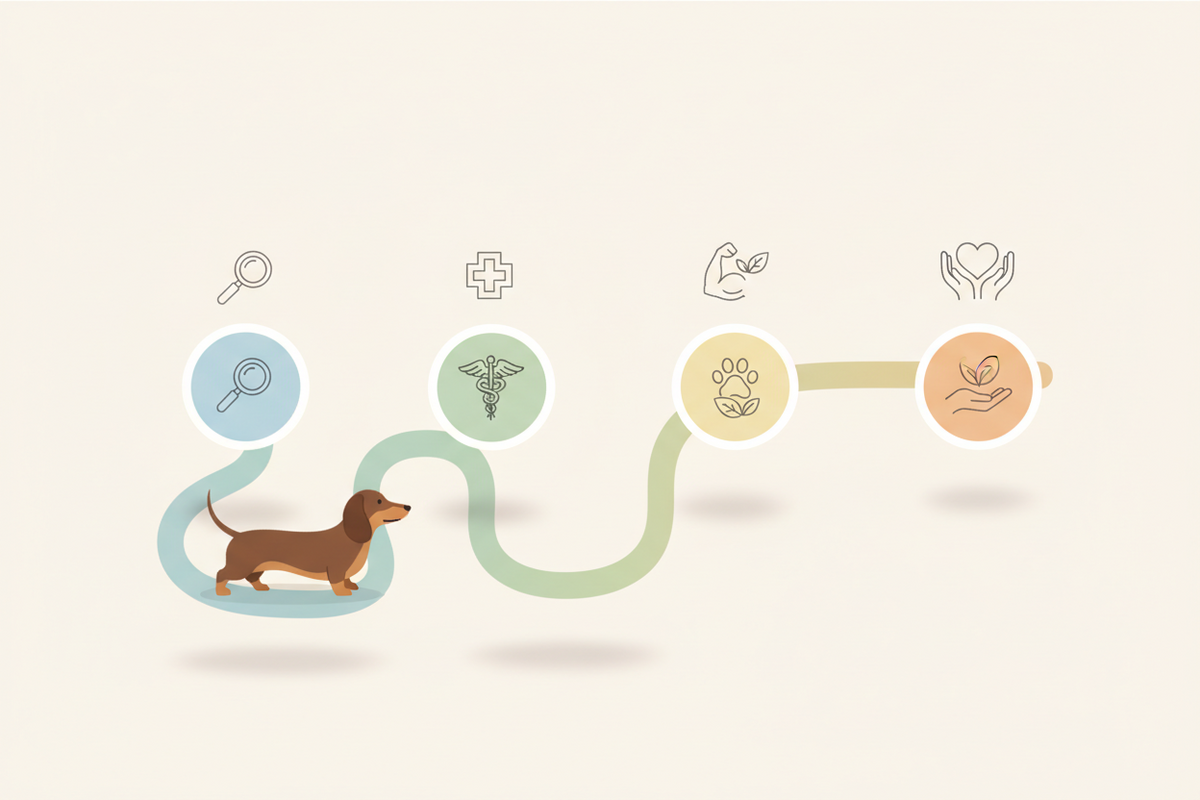
Choose your starting point
Where are you in the IVDD journey?
You do not have to begin at Step 1. Choose the situation closest to where you and your dog are today.
My dog has just shown symptoms
Start with immediate signs and what to do next.
We are being assessed or referred
Understand neurological severity, imaging and the questions your veterinary team may discuss.
We are deciding on treatment
Compare conservative management and surgery, then use the detailed treatment guides.
We are in recovery now
Focus on safe rest, daily care, rehabilitation and gradual progress.
We need longer-term support
Explore prevention, recurrence planning, mobility and living well with changing needs.
Step 1
Recognise symptoms and urgent warning signs
When symptoms are new, the first job is not to diagnose IVDD yourself. Recognise concerning changes, control unnecessary movement and get the right veterinary assessment.
Step 2
Understand the neurological assessment and diagnosis
These guides explain the terminology, severity findings and imaging decisions that often shape what happens next.
Step 3
Make sense of the treatment decision
Treatment is individual. Understand the evidence around conservative management, surgery and developing treatments, then make decisions with the veterinary team responsible for your dog.
Step 4
Build the recovery plan
After assessment and treatment, focus on controlled movement, safe handling, daily care, monitoring and carefully timed rehabilitation.
Step 5
Plan for longer-term life after IVDD
Once the immediate recovery period settles, shift towards realistic risk reduction, recurrence preparedness, mobility and quality of life.
Begin with the stage that matches your dog today
If symptoms are new, start with the emergency and symptom guides. If you already have a diagnosis, jump directly to assessment, treatment or recovery.
Start: Think your dog has IVDD?Trust & safety
Medical limitations & how to use this roadmap
The roadmap is for orientation, not diagnosis. It cannot decide which stage your dog is in or whether surgery, conservative treatment, rehabilitation or another plan is appropriate.
Use it to find the next question
Symptoms such as pain, wobbliness, weakness, dragging, paralysis or bladder changes can have causes other than IVDD. New or worsening signs need veterinary assessment.
How this roadmap is prepared
Aubenord’s IVDD guides are prepared using peer-reviewed veterinary literature, specialist consensus guidance and reputable clinical sources.
Where owner experience, including Loui’s story, is included, it is clearly separated from veterinary evidence.
Evidence base
Sources & further reading
- Olby et al. (2022) — ACVIM consensus statement on diagnosis and management of acute canine thoracolumbar disc extrusion
- Fenn et al. — canine intervertebral disc disease terminology and classification
Evidence limit: this roadmap organises the IVDD journey; it does not diagnose an individual dog or replace the treating veterinary team.