


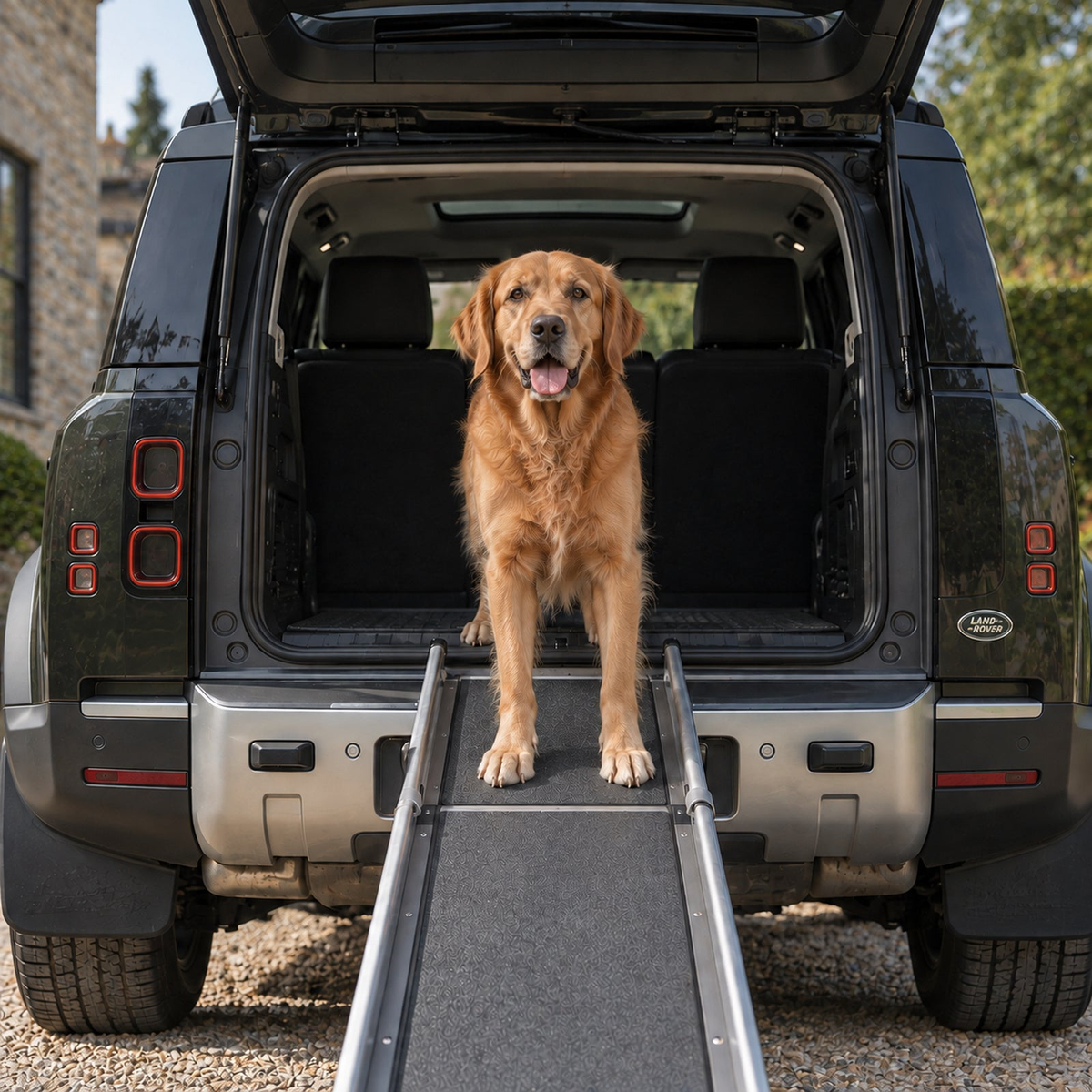
Check the recovery stage first
If the dog has been told to rest strictly, lifting may be more appropriate than encouraging independent ramp use.

UK RECOMMENDATIONS
Ramps and home-access aids can reduce unnecessary jumping on and off cars, sofas, beds and other raised surfaces. For dogs recovering from IVDD, the priority is a stable, non-slip route with a shallow enough incline for controlled movement.
Choose by the real height you need to bridge, available floor space, surface grip and whether the ramp will be used indoors, outdoors or for the car. A ramp should support the whole dog securely and should not encourage unsupervised activity during prescribed rest.
Safer access
Ramps can reduce jumping in selected situations, but they are not automatically appropriate during strict rest or acute recovery. The decision starts with whether the dog should be walking that route at all.
If the dog has been told to rest strictly, lifting may be more appropriate than encouraging independent ramp use.
Match ramp length to the actual car, sofa or step height. A ramp that is too steep can defeat the purpose.
The surface should resist slipping and the ramp should feel solid under load without rocking or shifting.