


IVDD treatment guide
IVDD surgery in dogs: when is surgery recommended?
Not every dog with IVDD needs surgery. Surgery is more commonly discussed when neurological deficits are substantial or worsening, a dog cannot walk, paralysis is present, pain cannot be adequately controlled, or imaging shows a compressive disc problem best treated surgically.
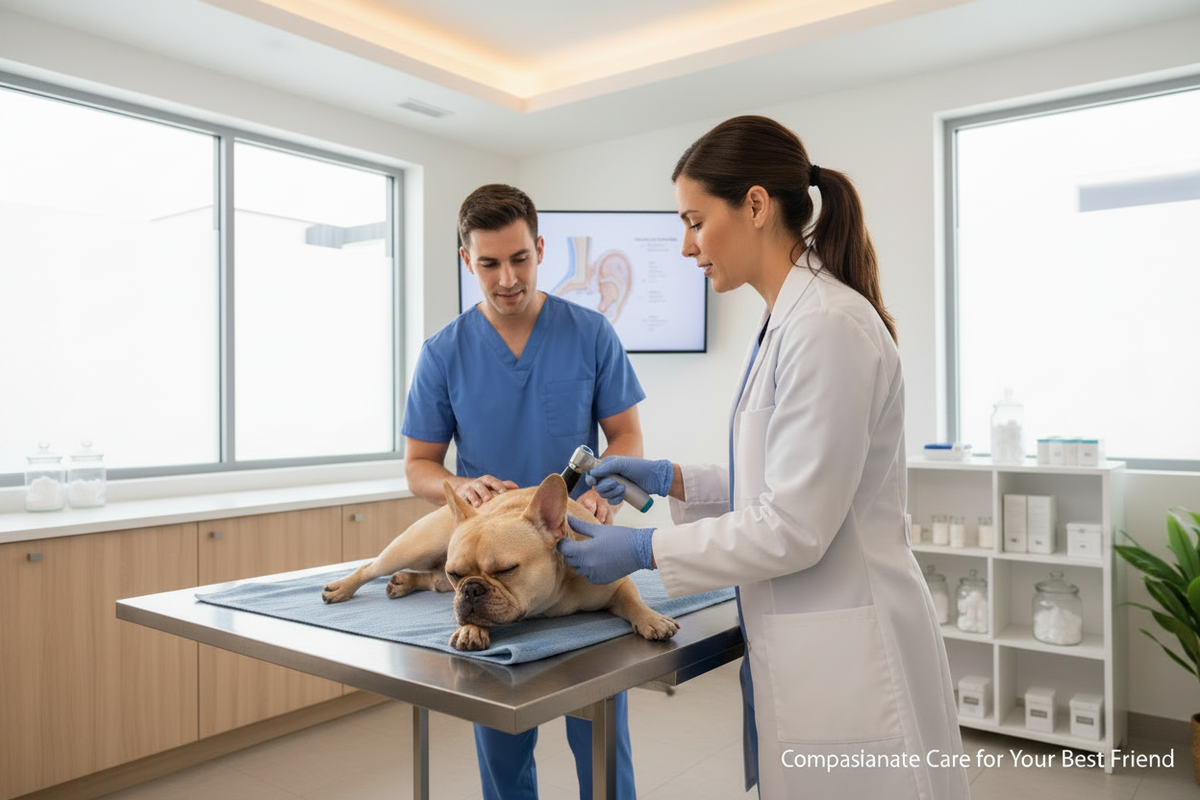
Surgery vs conservative treatment
The decision is based on neurological function, progression, pain and imaging — not one number or one internet rule
Dogs that are still walking and neurologically stable may be candidates for veterinary-managed conservative treatment. As deficits become more severe, especially when a dog cannot walk, is worsening or has lost deep pain perception, decompressive surgery is more commonly recommended.
Milder or ambulatory cases
Medical management can be appropriate for selected dogs when neurological function is relatively preserved and pain can be controlled. Deterioration, recurrent pain or failure to improve can change the discussion.
Non-ambulatory or severe cases
For dogs that cannot walk because of thoracolumbar disc extrusion, current specialist consensus generally favours surgery, with greater concern when paralysis is present or deep pain perception is absent.
Why surgery is discussed
Common reasons a specialist may recommend surgery
These are decision factors, not a checklist owners should use to decide on an operation themselves.
Loss of walking ability
A dog that becomes unable to walk needs prompt specialist assessment.
Progressive neurological signs
Increasing weakness, worsening coordination or progression towards paralysis can shift the balance towards surgery.
Clinically important compression
MRI or CT may show disc material compressing the spinal cord or nerve roots in a way best treated with decompression.
Pain that is difficult to control
Severe, recurrent or persistent spinal pain despite appropriate medical treatment can be another reason to discuss imaging and surgery.
What the operation may involve
There is not one single “IVDD surgery”
The approach depends on where the disc material is, how it is affecting the spinal cord or nerve roots, and what imaging shows.
Thoracolumbar IVDD
Hemilaminectomy or a related approach is commonly used to access and remove compressive disc material.
Cervical IVDD
A ventral slot is a commonly used decompressive approach for suitable cervical disc extrusions.
Disc fenestration
Fenestration may be performed at the affected disc in selected cases; whether other discs are fenestrated is a separate case-specific discussion.
What surgery cannot promise
Decompression removes a mechanical problem; it does not instantly reverse spinal cord injury that has already occurred.
Surgery day
A simple surgery-day pathway
Before surgery
The team reviews the neurological examination and imaging, then plans anaesthesia and the surgical approach.
The procedure
The surgeon uses imaging to reach the affected spinal region and decompress the spinal cord or nerve roots as appropriate.
Immediate recovery
Pain relief, neurological function, urination, wound condition and general recovery are monitored closely.
Discharge plan
The team gives an individual plan for medication, controlled activity, toileting or bladder support, wound checks and follow-up.
Before you consent
Questions to ask the veterinary neurologist or surgeon
Why are you recommending surgery now?
Ask which neurological and imaging findings are driving the recommendation and how urgent the decision is.
What if we choose conservative treatment?
Ask what a non-surgical plan would involve, the realistic chance of improvement and what would trigger reconsideration.
What procedure are you proposing?
Ask the surgeon to name the operation, explain where the disc problem is and what the procedure is intended to achieve.
What is my dog’s neurological status?
Ask whether your dog is ambulatory, has voluntary movement and, in severe cases, whether deep pain perception is present.
What does recovery usually involve?
Ask about hospitalisation, pain relief, controlled activity, bladder support, rehabilitation and follow-up.
What is the full estimate?
Clarify imaging, surgery, anaesthesia, hospitalisation, medication, emergency fees and likely follow-up costs.
After surgery
What the early recovery period may involve
Neurological recovery is not instant simply because the spinal cord has been decompressed. Progress depends on the injury present before surgery and healing over time.
Hospital recovery
The team monitors neurological function, pain, urination, wound condition and general recovery before discharge.
Controlled activity
Movement restrictions after surgery are prescribed by the surgical team. Follow their plan rather than a generic online timetable.
Bladder and bowel support
Some dogs need temporary or longer-term help with bladder emptying and toileting. Ask for hands-on instruction if this applies.
Rehabilitation
Physiotherapy or rehabilitation may be introduced when the specialist believes it is safe and useful for your dog’s stage.
Need a specialist opinion about surgery?
Use Aubenord’s specialist directory to find veterinary referral centres experienced in neurology, advanced imaging and spinal surgery.
Find an IVDD specialistQuick answers
IVDD surgery questions
Does every dog with IVDD need surgery?
No. Treatment depends on neurological severity, pain, progression, imaging findings and the individual dog. Some ambulatory or stable cases can be managed conservatively under veterinary supervision.
When is IVDD surgery commonly recommended?
Surgery is more commonly recommended when neurological deficits are substantial or worsening, a dog cannot walk, paralysis is present, pain cannot be controlled or imaging shows clinically important compression.
Is there a strict 24- or 48-hour deadline?
No universal evidence-based cutoff means recovery becomes impossible after a fixed number of hours. Severe or worsening neurological signs still need urgent specialist assessment.
What operation is used for IVDD?
The operation depends on lesion location and imaging. Hemilaminectomy is commonly used for thoracolumbar disc extrusion, while a ventral slot is commonly used for suitable cervical disc extrusions.
Will my dog walk again after surgery?
Outcome varies with neurological severity, deep pain status, spinal cord injury, treatment and complications. Your neurologist is best placed to discuss prognosis for your dog.
Keep exploring
Related IVDD guides
Continue with the guide that best matches the question you have next.
Trust & safety
Medical limitations & how this surgery guide is prepared
Treatment decisions depend on the individual dog’s neurological examination, pain, progression, imaging where indicated and overall circumstances. Aubenord cannot determine whether surgery is appropriate.
Medical information & limitations
IVDD treatment decisions can be time-sensitive. Follow the vet or veterinary neurologist responsible for your dog.
Seek urgent assessment if neurological function suddenly worsens, your dog cannot stand or walk, severe uncontrolled pain develops or your dog has new difficulty urinating.
How this surgery guide is researched
Aubenord uses specialist consensus guidance and peer-reviewed research comparing surgical and conservative management, while stating evidence limitations.
Evidence base
Sources & further reading
- Olby et al. (2022) — ACVIM consensus statement
- Langerhuus & Miles (2017) — systematic review and meta-analysis of recovery after thoracolumbar disc extrusion
- Prospective conservative-management cohort (2024)
- Contemporary outcomes in dogs undergoing cervical ventral slot surgery
Evidence limit: published study populations and consensus recommendations cannot predict an individual dog’s outcome.